


Successfully operating digital transition is a crucial challenge for a company.
Crédits photos : CATIE
The digital transformation of companies is a key challenge to remain competitive. However, with the rapid expansion of innovative solutions such as artificial intelligence and virtual reality, professionals often need support to make the most of these tools for development purposes. CATIE supports companies in their digital transformation through technological and immersive solutions. We spoke with Florent Larrue, Head of the Human-Centered Systems Department.
Can you introduce CATIE?
Created in 2014 near Bordeaux, CATIE is a Technological Resource Center supported by the Nouvelle-Aquitaine Region with a clear objective: to support SMEs and mid-sized companies in their digital transformation.
It plays a key role in connecting research laboratories and businesses in order to bring innovative solutions to companies in three main fields: algorithms and data, cyber-physical systems, and human-centered systems.
Support for companies takes place at different stages: proof of concept, consulting, assistance, expert advice and solutions, as well as innovative vision and multidisciplinary analysis. CATIE helps remove technological barriers encountered by organizations that consult us. This enables them to adopt and integrate innovative technologies, acquire new knowledge, access additional resources, and upskill their teams.
What will you present at the event?
The Human-Centered Systems team at CATIE, part of which will be present at the event, is made up of around fifteen engineers and PhDs combining human and social sciences (ergonomics, cognitive science, physiology, neuroscience, etc.) with technology (virtual reality, augmented reality, mixed reality, tablets, PCs, smartwatches, etc.). We support companies in developing digital technologies by taking into account the capabilities of end users, in order to improve usability and acceptance. In a world where responsible digital technology is becoming a priority, it is essential to raise awareness among innovative companies about developing digital technologies in a reasoned way, based on the value brought to users and the overall development costs involved.
We work on methodologies that integrate, very early in the design cycle, human capabilities, user needs and constraints, and the advantages and limitations of technology. Indeed, many companies prioritize technology first, and only later consider the real need and final usage. While technology can bring undeniable benefits, it can also introduce constraints or even become counterproductive.
We support companies in the development of digital technologies by taking into account end-user capabilities during the design and development of digital systems, in order to improve usability and acceptance.
Our insights and methodologies are accessible via our cognitive and behavioral evaluation platform for humans, Peacch. This fully free online web platform provides companies with evaluation tools, questionnaires, and experimental protocols that we continuously use in our projects to test the usability performance of our digital solutions.
Will you offer demos?
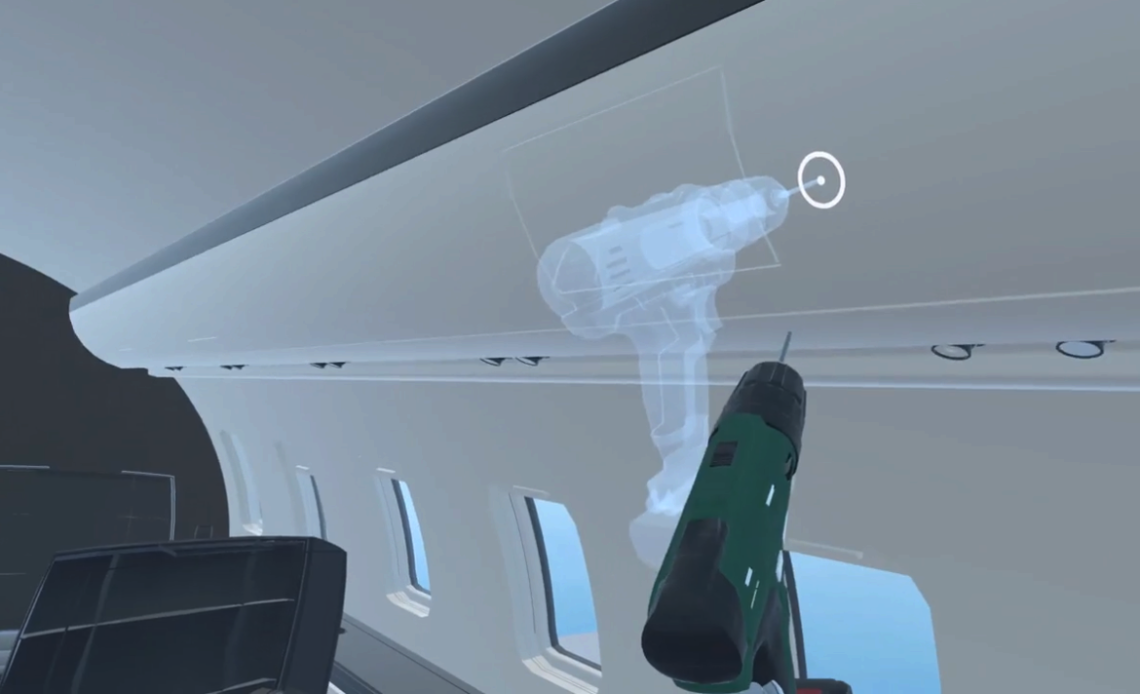
This year, CATIE is presenting several demonstrators. As part of our internal research on new digital technologies for training, learning, and knowledge management, we are showcasing a virtual reality application that simulates a professional gesture performed by a craftsperson during a drilling task. Our goal is to identify innovative methodologies based on behavioral and motion data from immersive technologies, to better capture professional know-how, store it, and improve both learning performance and training personalization.
We are also presenting Phoenix, a Deffinum project involving Pyla (the training center of CRT Alphanov), Photonics France (the national photonics association), and CATIE. This three-year project develops turnkey photonics training technologies in the form of VR modules in an immersive photonics laboratory, educational videos illustrating physical phenomena, an online mathematics training platform for optics, and the use of generative AI in a training context.
Within this framework, CATIE is also developing methodologies to assess the impact of training technologies. These methodologies are twofold: they include a generic component and a component tailored to the tools developed within the project. We are also developing support materials for trainers regarding educational technologies in general. These resources focus both on supporting the design of training systems and on integrating these tools into educational sequences.
We will also present our work on the use of AI in education.
Our research first involves surveys with specialized teachers and learners to understand the uses and perceptions of generative AI in education. We are also developing POCs around automated multiple-choice question generation. Our goal is to address questions related to content generation analysis and its impact on assessment and learning performance.
A demonstration of our cognitive and behavioral evaluation platform for humans will also be available. All our methods are accessible via this fully free online platform, which provides evaluation tools, questionnaires, and experimental protocols that we use continuously in our projects to test usability performance and acceptance of our digital solutions.
We will also present several demonstrators related to the fusion of physiological, behavioral, objective, and subjective data to characterize, for example, emotions, cognitive load, stress, or cybersickness in immersive environments. We will also showcase various types of sensors used for these analyses. Finally, we are considering a demonstration on spatial video projection and tangible interactions to make the functioning of an artificial intelligence algorithm more understandable to humans.
Are you currently working on innovations?
At the moment, CATIE is working on several innovative topics, particularly around detecting users’ cognitive states through various methods, including physiological analysis, motion analysis, and standardized questionnaires. We will present a project on detecting cybersickness in VR using these tools.
We are also working on human-centered AI design methodologies. At a time when AI is being used everywhere, there is a real need to understand the added value AI brings to different professions, depending on end-user needs. Very often, AI systems can become overly complex, like a “gas factory,” difficult to understand for humans, which leads to rejection of the technology. In this context, we are developing user-centered design methodologies to account for human needs and variability, aiming for reasoned AI algorithms adapted to end-user professions. These methodologies have been developed and tested in several European projects, particularly in aerospace, maintenance, disability support, and retail environments.
As mentioned, we have significant activity around knowledge management, particularly the digitization, storage, and reproduction of professional gestures within companies. Our approaches aim to ensure that gesture-tracking technologies are optimized in terms of development and economic cost, while also evaluating their impact on knowledge and skill transfer for end users.
How does CATIE contribute to transforming businesses?
Our applied research activities enable companies to stay one step ahead in technological innovation. We aim to disseminate our findings so that businesses can design immersive digital tools that are adapted to user needs and capabilities—key factors in improving acceptance and the democratization of these technologies.