



Crédits photos : © 2sync
Winner of the Developer & Authoring Tools category at the Laval Virtual Awards 2026, the 2Sync SDK, developed by German company 2Sync GmbH, took home the prize awarded on 9 April at the Espace Mayenne. Held in Laval for 28 years, Europe’s largest XR event recognises the most promising XR projects each year across a range of categories. The Developer & Authoring Tools category honours the platforms and engines that empower creators to build the next generation of XR experiences.
Creating a mixed reality experience that allows free movement, interaction with physical objects and spatial consistency still requires a significant amount of manual work. Every level is designed for a fixed room size, every virtual object must be placed by hand, and changing location means starting over: new tests, new safety adjustments. A constraint that makes these experiences costly to produce and difficult to deploy outside controlled environments.
The problem of the room that never quite fits
It was this problem, experienced first-hand, that pushed Moritz Loos, founder of 2Sync, to develop a different approach. “I’ve always loved being fully immersed, and back in 2018, working on location-based XR, I saw how powerful it was when the physical and the virtual world connected. But building these experiences was extremely time-consuming. You had to measure the real space, rebuild everything in Unity, adjust it again and again just to make it fit.” It was during his master’s thesis that he began working on a room-independent approach to describing XR experiences.
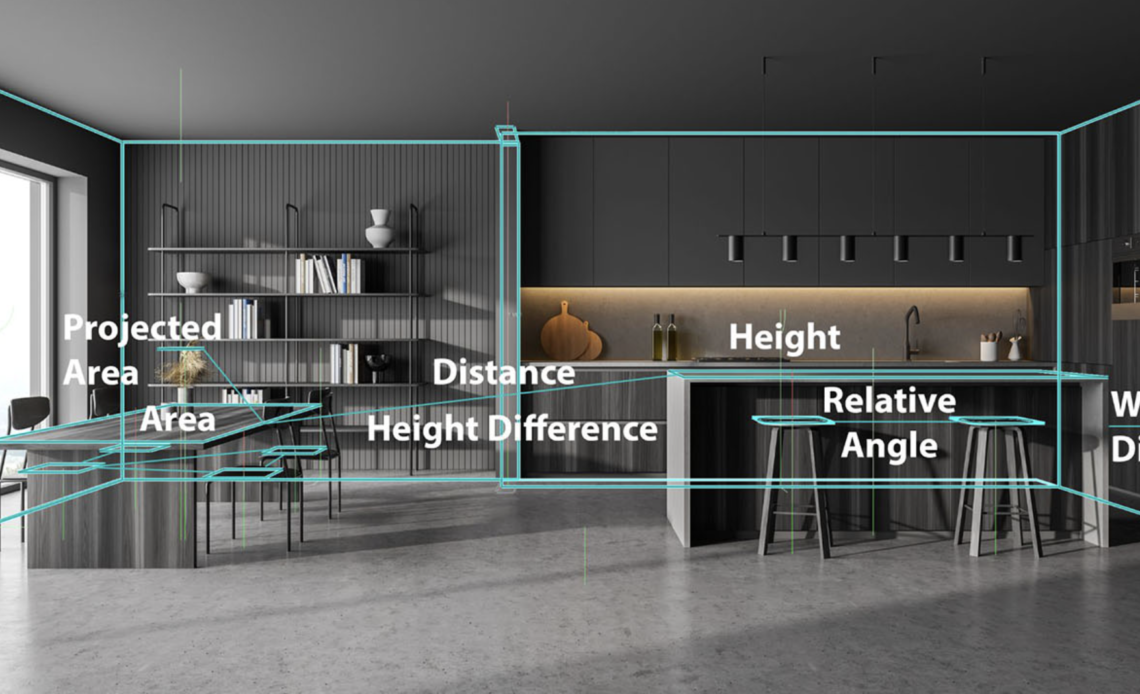
The 2Sync SDK is built on a three-layer architecture that runs at the moment the user puts on their headset. The first layer, extraction, captures the physical environment, either manually or automatically via room scanning tools built into platforms such as Meta. The second, mapping, analyses that space and matches the experience’s requirements (a wall, a corner, a table-sized surface, a free floor area) to the real structures available in the room. The third, generation, then builds the virtual environment adapted to that specific space in real time: paths, play areas, interactions.
Three steps to transform any living room
The result is captured in an image Moritz Loos is particularly fond of: “My apartment becomes a full game world in a second, instead of hours or days of manual work.” The SDK enables real walking, which significantly reduces motion sickness compared to artificial locomotion systems, and passive haptics, where real-world objects become part of the experience.
The technology is already at work in several titles available on the Meta Store, including House Defender, Mixed Snow World, The Last Galaxy and Elven Heroes, itself nominated at Laval Virtual this year. Designed to remain hardware-independent, the SDK is currently deployed on Meta Quest and Pico, but its architecture is built to adapt to future XR ecosystems.
Moritz Loos was unable to travel to accept his award in person and delivered his message by video, visibly moved: nominated several times in the past, this was his first win at Laval Virtual. He invites interested developers to reach out to him directly on LinkedIn to join the SDK beta programme.

